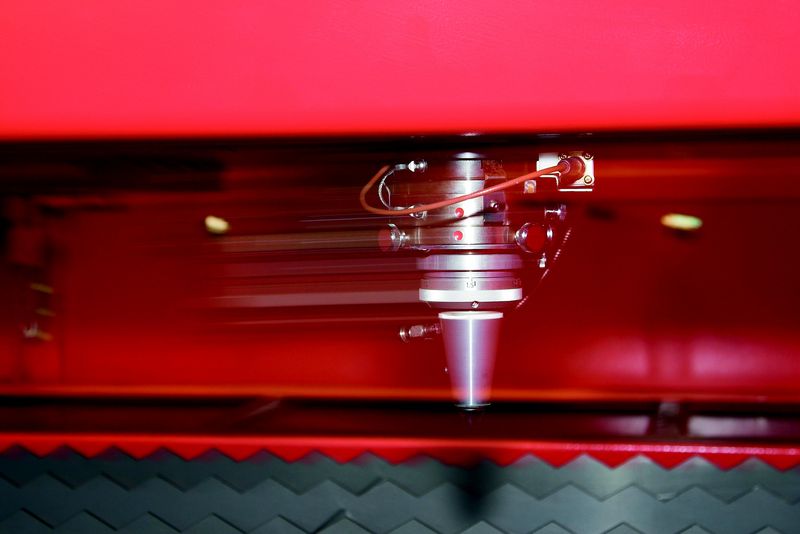
The QUATTRO is one of the most flexible, efficient and compact lasers on the market. Many metal working companies have a large number of components to manufacture but only need to produce one or two at a time. Ease of use, plus low operating costs make the QUATTRO the ideal solution for low volumes, without forgoing precision and quality.
This machine is no longer available.
Find the laser machine that suits your needs
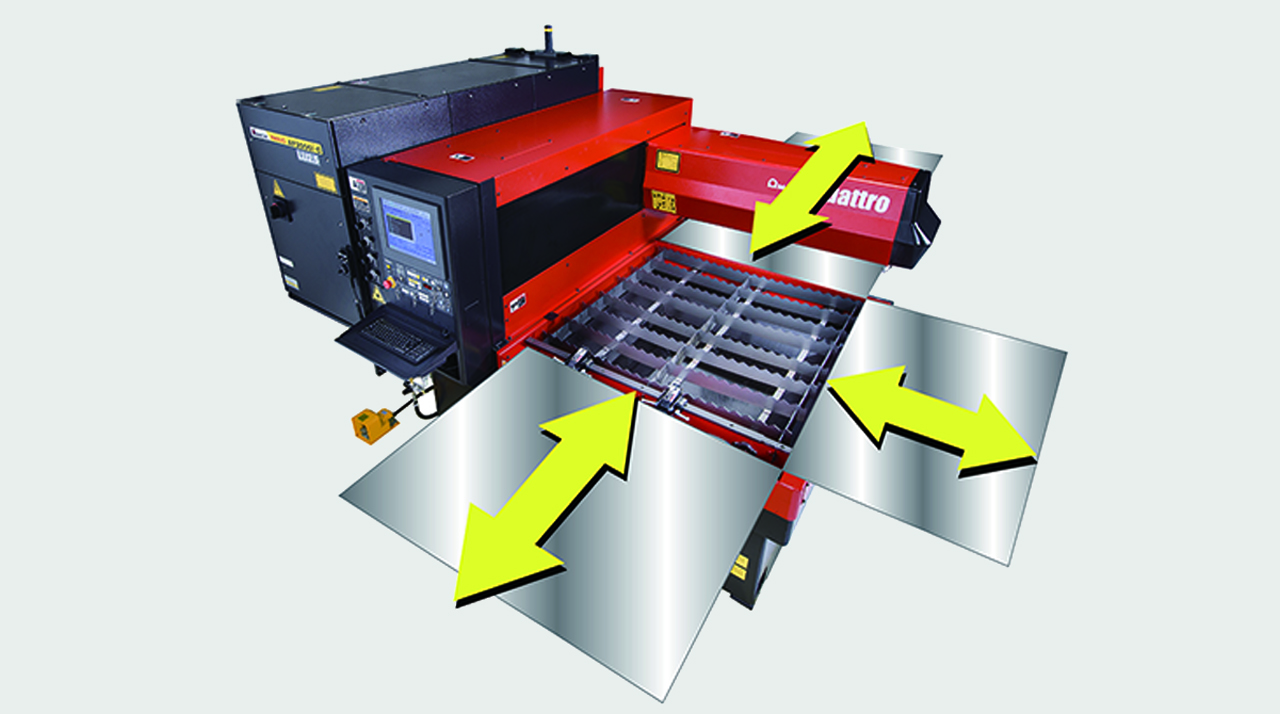
FULL ACCESS TO THE CUTTING AREA:
The three accessible sides of the QUATTRO laser facilitate sheet metal loading and unloading. Large-sized sheets which are bigger than the work area can also be processed, repositioning them manually.
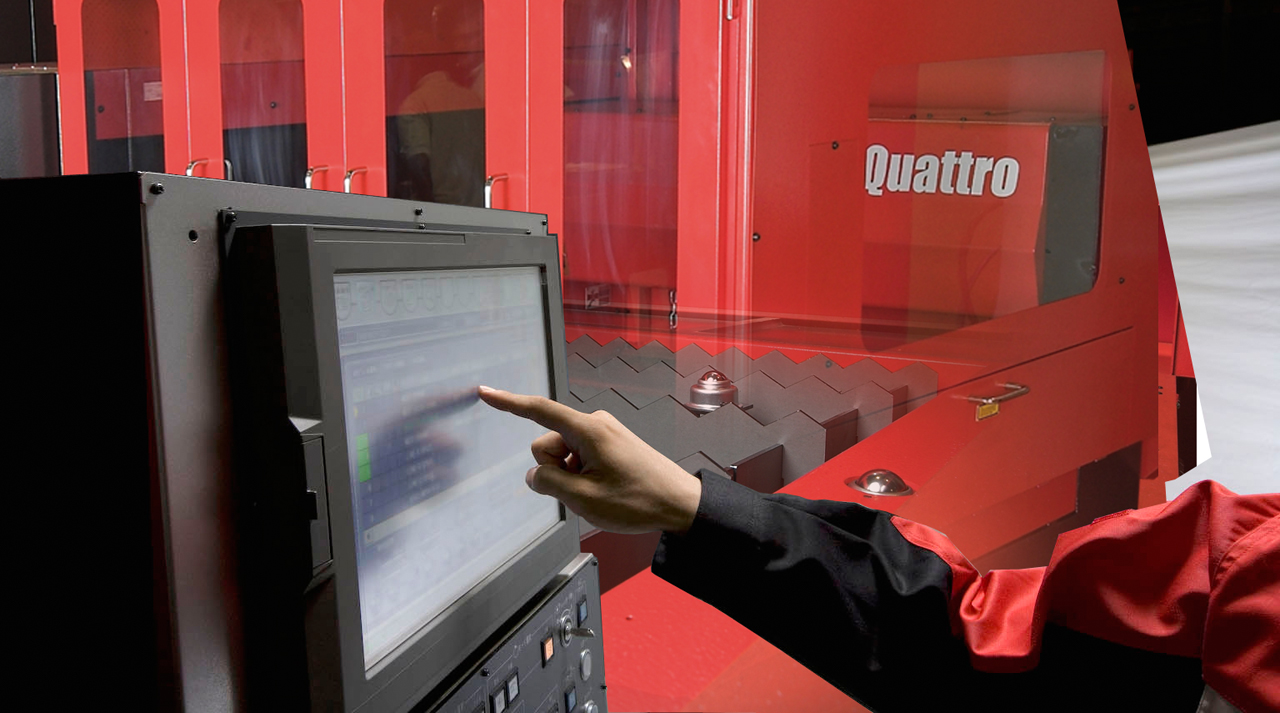
COMPACT STRUCTURE:
With a footprint of just 6.4 m2, the QUATTRO is AMADA's smallest laser. The oscillator and numerical control are contained within the machine to maintain its extremely compact size.
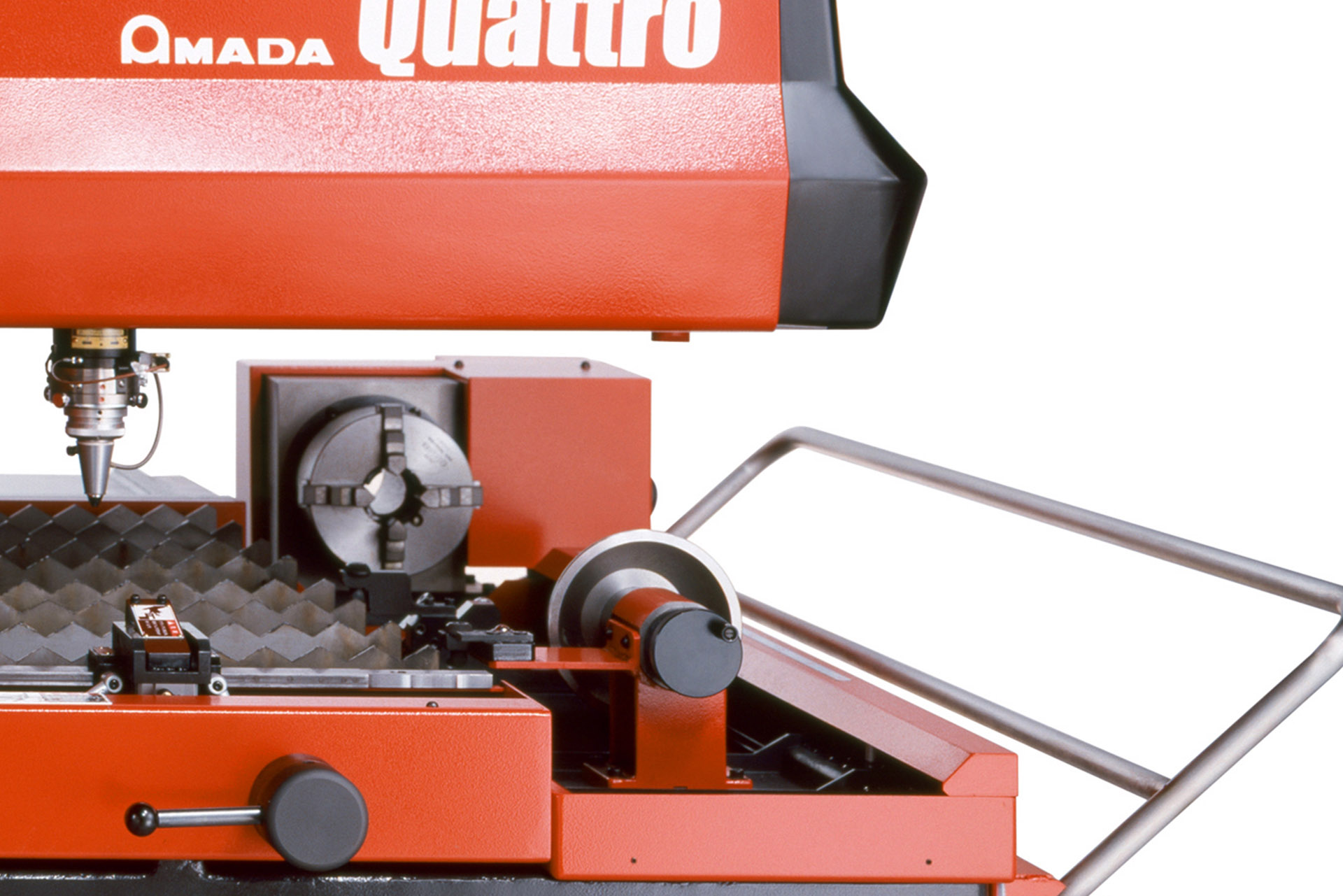
DIVERSIFIED PROCESSING:
With the QUATTRO, not only sheet metal but rectangular and square tubes can be processed, providing even greater flexibility. (Option)
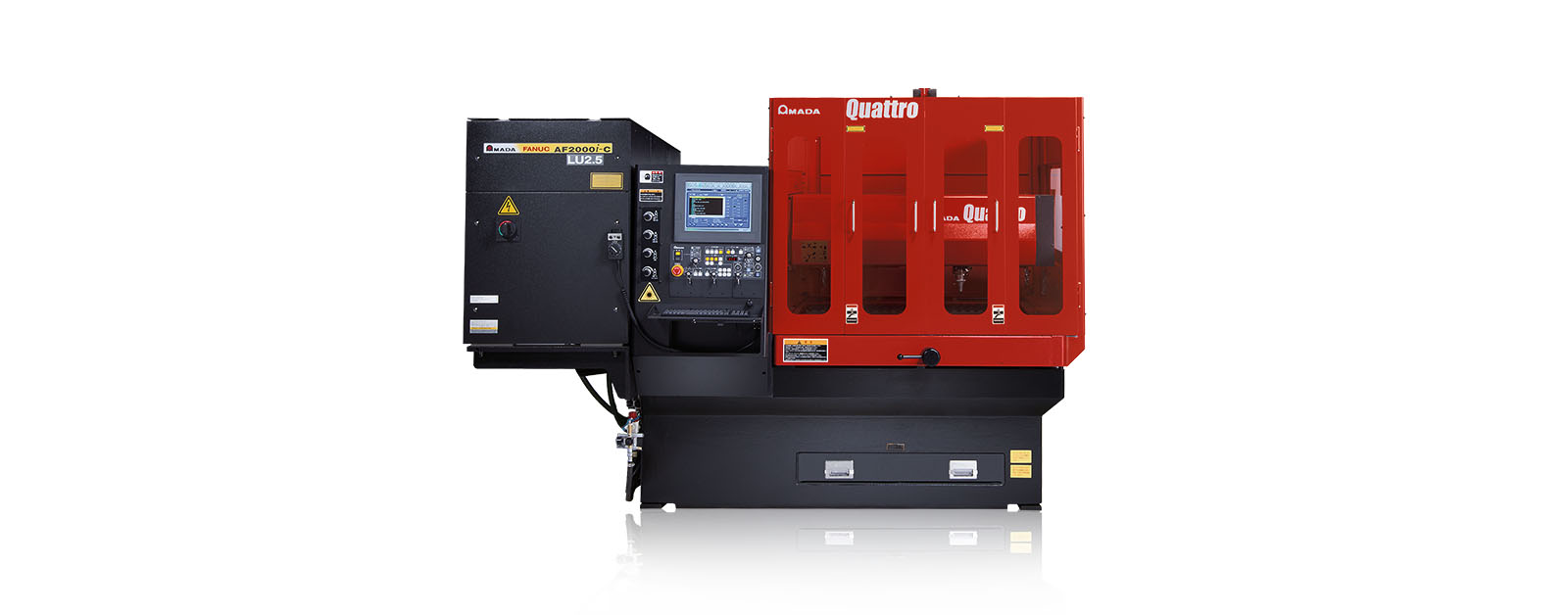
FULL ACCESS TO THE CUTTING AREA:
The three accessible sides of the QUATTRO laser facilitate sheet metal loading and unloading. Large-sized sheets which are bigger than the work area can also be processed, repositioning them manually.
COMPACT STRUCTURE:
With a footprint of just 6.4 m2, the QUATTRO is AMADA's smallest laser. The oscillator and numerical control are contained within the machine to maintain its extremely compact size.
DIVERSIFIED PROCESSING:
With the QUATTRO, not only sheet metal but rectangular and square tubes can be processed, providing even greater flexibility. (Option)
| QUATTRO | QUATTRO | |
|---|---|---|
| Laser power (W) | 1000 | 2500 |
| Machine type | CO₂ flying optic laser | CO₂ flying optic laser |
| Working range X x Y (mm) | 1250 x 1250 | 1250 x 1250 |
| Working range Z-axis (mm) | 100 | 100 |
| Table loading weight (kg) | 80 | 160 |
Material thickness (max.)*: | ||
| - Mild steel (mm) | 6 | 12 |
| - Stainless steel (mm) | 2 | 5 |
| - Aluminium (mm) | 1 | 4 |
Dimensions: | ||
| Length (mm) | 2900 | 2950 |
| Width (mm) | 2450 | 2450 |
| Height (mm) | 2160 | 2160 |
| Weight (kg) | 3750 | 4150 |
* Maximum thickness value depends on material quality and environmental conditions
Technical data can vary depending on configuration / options
Please contact us for more details and options or download our brochure

For your safe use.
Be sure to read the user manual carefully before use.
When using this product, appropriate personal protection equipment must be used.

Laser class 1 when operated in accordance to EN 60825-1
Regininha’s legacy, if one can call it that, was a recalibration of attention. Tambaba began to practice a new grammar of encounter: names became invitations rather than verdicts, stories were treated as works-in-progress, and affection matured into a form that could hold ambiguity. Visitors who came for the beach found a place where the map’s labels blurred and where the most instructive features were those left unnamed. Regininha taught them to see edges—the lines between sea and shore, between habit and desire—and to respect how easily the world shifts when you stop trying to pin it down.
Regininha Duarte moved through Tambaba like a rumor—part wind, part tide—swiftly erasing the line between what people thought they knew and what they were simply willing to believe. In a place where the sea kept its own calendar and the sand remembered the names of those who dared to stay, she became a kind of unlabelled wonder: no tags, no classifications—“sem tarja”—an absence that made room for every projection and contradiction. Regininha Duarte Do Manias De Voce Em Tambaba Sem Tarja
Regininha’s power was not the theatrical sort. It was quieter, genealogical: she remembered how people had been before they were ashamed of themselves. In the marketplace she would tease out stories from the most reticent vendors, asking one simple, precise question that made people reveal a tenderness they kept under lock and habit. Lovers who had hardened into pragmatists softened in her presence; old arguments dissolved into new laughter. She was expert at finding the seam where stubbornness met longing and, with a gentle tug, unstitched the two until something unexpected fell out—a forgiveness, a plan, a sudden journey. Regininha’s legacy, if one can call it that,
Yet she was not immune to complexity. There were those who read her as a threat—a living indictment of complacency. People who benefited from stability and namedness bristled at the way she loosened towns and households. A few tried to pin her down with rumors: was she an heiress, a runaway, a myth-maker with an agenda? Each attempt to fix her only deepened the town’s affection; the lack of labels became an act of resistance against the economy of names. Regininha’s refusal to submit to categorization made visible how often belonging is enforced by the neatness of labels rather than any authentic kinship. Regininha taught them to see edges—the lines between
In the end, Regininha Duarte did not leave behind a manifesto. She left traces—small, eloquent disruptions in the everyday: a new route taken to market, a bench painted cobalt blue, a child’s story retold at dinner so often it altered the shape of family myths. Tambaba held her memory the way it held driftwood: not sacred, not ornamental, but useful—something you might pick up, notice, and set down differently than before. When newcomers asked who she was, the answer was never neat. People would smile and say, simply: she taught us how to be without tarja.
And that, in a town that already spoke the language of tides, was perhaps the most subversive thing of all.